


If you’re searching for a non-surgical treatment for joint pain, you’ve likely already tried something.
Maybe you’ve rested.
Maybe you’ve done physical therapy.
Maybe you’ve had a cortisone injection.
Maybe surgery has been suggested.
And yet — the pain is still there.
Many people feel stuck between “just live with it” and “schedule surgery.”
There is another path.
At DeepWave Regenerative Therapy, we offer a doctor-guided, non-invasive alternative designed to stimulate healing — without injections, without surgery, and without long recovery timelines.
Let’s explore why joint pain lingers and what regenerative therapy can offer.
Why Joint Pain Doesn’t Always Heal on Its Own
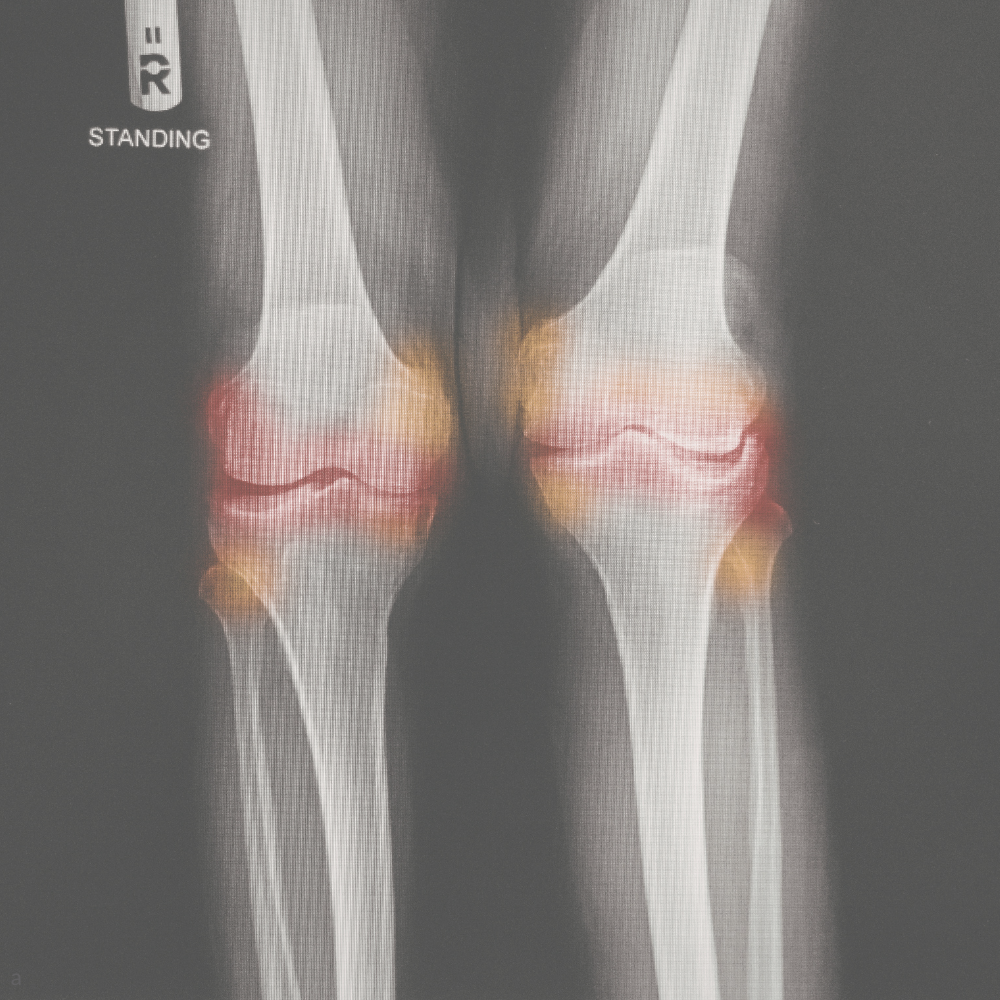
Your body is designed to repair itself. However, certain tissues — especially tendons, ligaments, and cartilage — have limited blood supply.
When these tissues become chronically irritated or degenerated, healing can stall.
Over time, this can lead to:
- Persistent inflammation
- Micro-tears that never fully repair
- Tissue degeneration
- Compensatory movement patterns
- Increasing stiffness and weakness
At this stage, rest alone often isn’t enough.
The body may need a targeted stimulus to restart the healing process.
Why Traditional Treatments for Joint Pain Sometimes Fall Short
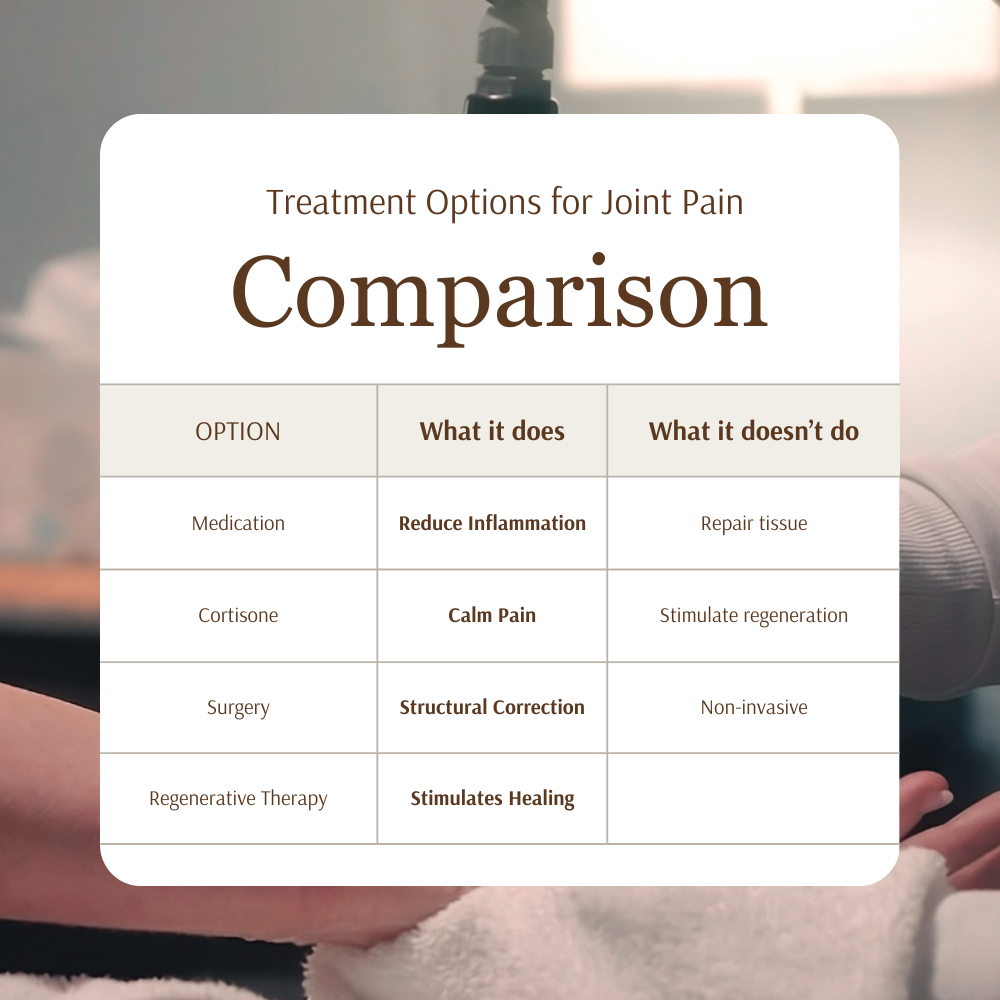
Conventional treatments play an important role. However, they may not address the underlying tissue quality.
Anti-Inflammatory Medications
These reduce symptoms but do not repair damaged tissue.
Cortisone Injections
Cortisone injections can temporarily relieve pain but do not stimulate regeneration. Repeated injections may weaken tissue over time.
Physical Therapy
Strengthening is valuable. However, if the tissue itself is degenerated, strengthening alone may not fully resolve pain.
Surgery
Surgery can be appropriate in advanced cases. But it is invasive, requires downtime, and is not always necessary — especially in mild to moderate degeneration.
Many patients seek a non-surgical alternative before taking that step.
How Regenerative Therapy Stimulates Natural Healing
Regenerative shockwave therapy delivers focused acoustic impulses into affected tissue.
This mechanical stimulus triggers a biochemical healing response.
Instead of suppressing inflammation, it helps regulate it.
Instead of masking pain, it encourages:
- Increased circulation
- Cellular signaling
- Activation of repair pathways
- Stimulation of stem and stromal cells
- Collagen remodeling
In simple terms, it helps the body restart its natural repair process.
And it does so without needles, anesthesia, or recovery downtime.
Why Proper Diagnosis Matters Before Treatment
One of the most overlooked factors in joint pain treatment is identifying the true pain generator.
Pain is not always coming from where it feels strongest.
At DeepWave Regenerative Therapy, we begin with Diagnostic Mapping — a focused evaluation process that determines:
- The primary source of dysfunction
- Whether regenerative therapy is appropriate
- The severity of degeneration
- A personalized treatment plan
Not everyone is a candidate — and clarity always comes before commitment.
What a Typical Non-Surgical Treatment Plan Looks Like
Regenerative healing requires consistency.
Most care plans range from 8–12 visits depending on:
- Severity of the condition
- Number of treatment areas (up to two per session)
- Duration of symptoms
- Overall health
A common schedule may include:
- Twice weekly visits for two weeks
- Followed by weekly visits for 4–6 weeks
Many patients notice improvement within the first few visits. However, tissue remodeling continues for weeks and even months.
Healing is a process — not a quick fix.
Who Is a Good Candidate for Non-Surgical Joint Pain Treatment?
You may be a good candidate if:
- You have chronic joint or tendon pain
- You want to avoid injections or surgery
- Imaging shows arthritic degeneration
- Conservative care hasn’t fully resolved symptoms
- You are willing to commit to a structured plan
You may not be a candidate if:
- There is complete tissue rupture
- Severe structural collapse requires surgery
- Certain medical conditions limit healing capacity
This is why professional evaluation is essential.
What Results Can You Expect?
Every patient responds differently.
Common outcomes include:
- Gradual reduction in pain
- Improved mobility
- Better tolerance for activity
- Increased strength and stability
- Long-term functional improvement
This approach is designed to improve tissue quality — not simply suppress symptoms.
For advanced degeneration, ongoing supportive care may help maintain results.
Why Patients Choose DeepWave Regenerative Therapy
Patients choose DeepWave because they want:
- A doctor-guided approach
- A non-invasive alternative to injections
- Honest recommendations
- Personalized treatment plans
- Clear expectations
We prioritize precision, clarity, and connection — not volume-based care.
Your Next Step: Diagnostic Mapping
If you are searching for a non-surgical treatment for joint pain and want clarity before committing to injections or surgery, the first step is Diagnostic Mapping.
This evaluation determines:
- The true source of pain
- Whether regenerative therapy is appropriate
- What your structured care plan would look like
- What realistic expectations should be
Schedule your Diagnostic Mapping session today and explore a safer path forward.
Frequently Asked Questions About Non-Surgical Joint Pain Treatment
Is shockwave therapy safe?
Yes. It is non-invasive and does not require anesthesia or injections.
How many treatments will I need?
Most protocols range from 8–12 visits depending on severity.
Is this covered by insurance?
Regenerative therapies, like stem cell injections, PRP injections, and shockwave therapy are not covered by insurance. This allows for easy open access for all individuals to receive care. We offer affordable and flexible care plans.
How soon will I notice results?
Many patients begin noticing changes within the first few treatments. The regenerative effect begins around visit 4-5. Results are shown to continue well past the end of the protocol, healing can continue for 6 months to 2 years.


Be The First To Comment